With the continuous extension of power infrastructure construction to high-altitude areas, the requirements for electrical testing equipment in substations, transmission lines, hydropower stations, and industrial power systems are also constantly increasing. Compared with plain areas, high-altitude environments have characteristics such as low air density, low air pressure, large temperature differences, and strong ultraviolet radiation, which may affect the insulation performance, heat dissipation capacity, and operational stability of high-voltage testing equipment. Therefore, when conducting electrical equipment testing in high-altitude areas, it is crucial to choose appropriate testing equipment.
1、 What are the impacts of high-altitude environments on electrical testing equipment
The air pressure in high-altitude areas decreases with increasing altitude, and the air density also decreases accordingly. For high-voltage testing equipment that relies on air insulation, the strength of air insulation will be affected, and under the same voltage conditions, the risk of discharge in the external air gap of the equipment may increase.
During high-voltage withstand voltage testing, partial discharge detection, and power frequency AC testing, special attention should be paid to changes in air insulation conditions. If the experimental equipment is still designed and configured according to the normal altitude environment, it may not meet the actual requirements of on-site high-voltage testing.
In addition, there is a large temperature difference between day and night in high-altitude areas, and some areas also experience low temperatures, strong winds, and dust. These environmental factors may affect the heat dissipation of electronic components, control systems, connecting components, and equipment. For high-voltage testing equipment that requires long-term operation, environmental adaptability is directly related to the continuity and reliability of the testing work.
2、 Focus on the insulation performance of the equipment
Insulation performance is the first factor to consider when selecting high-altitude testing equipment.
In high-altitude environments, the insulation strength of the air usually decreases with decreasing air pressure, so it is necessary to focus on checking the electrical clearance, creepage distance, and external insulation structure of the equipment. Especially for high-voltage equipment such as AC withstand voltage testing equipment, DC high-voltage generators, series resonance testing devices, and impulse voltage generators, insulation design and configuration should be based on the actual altitude of use.
For users who need to conduct on-site tests in high-altitude areas, the specific altitude, test voltage level, and usage environment should be provided to the manufacturer, and the manufacturer should confirm whether the equipment needs to be designed for high-altitude adaptability.
It is not enough to judge whether the equipment is suitable for high-altitude use solely based on its rated output voltage. It is also necessary to consider the insulation margin and safety distance of the equipment in actual environments.
3、 Check the heat dissipation and temperature adaptability of the equipment
The air density is lower in high-altitude areas, which may affect the ability of air convection and heat dissipation. For high-power test transformers, series resonant devices, and long-term high-voltage testing systems, heat dissipation issues cannot be ignored.
When selecting equipment, it is important to understand its cooling method, rated operating time, and temperature rise control. For equipment with air-cooled structure, it is necessary to confirm whether the fan and cooling system can adapt to the actual altitude conditions. For testing systems that operate continuously for long periods of time, attention should also be paid to the temperature rise of transformer windings, power components, and power modules.
If the equipment needs to be used in a low-temperature environment, the working temperature range of the control system, display screen, power module, and cable connection components should also be checked to avoid difficulties in starting the equipment or unstable measurement results caused by low temperatures.
4、 Select the appropriate device type based on the test object
The testing items for different power equipment are different, and users in high-altitude areas should choose the corresponding testing instruments according to their actual testing needs, rather than simply pursuing the number of equipment functions.
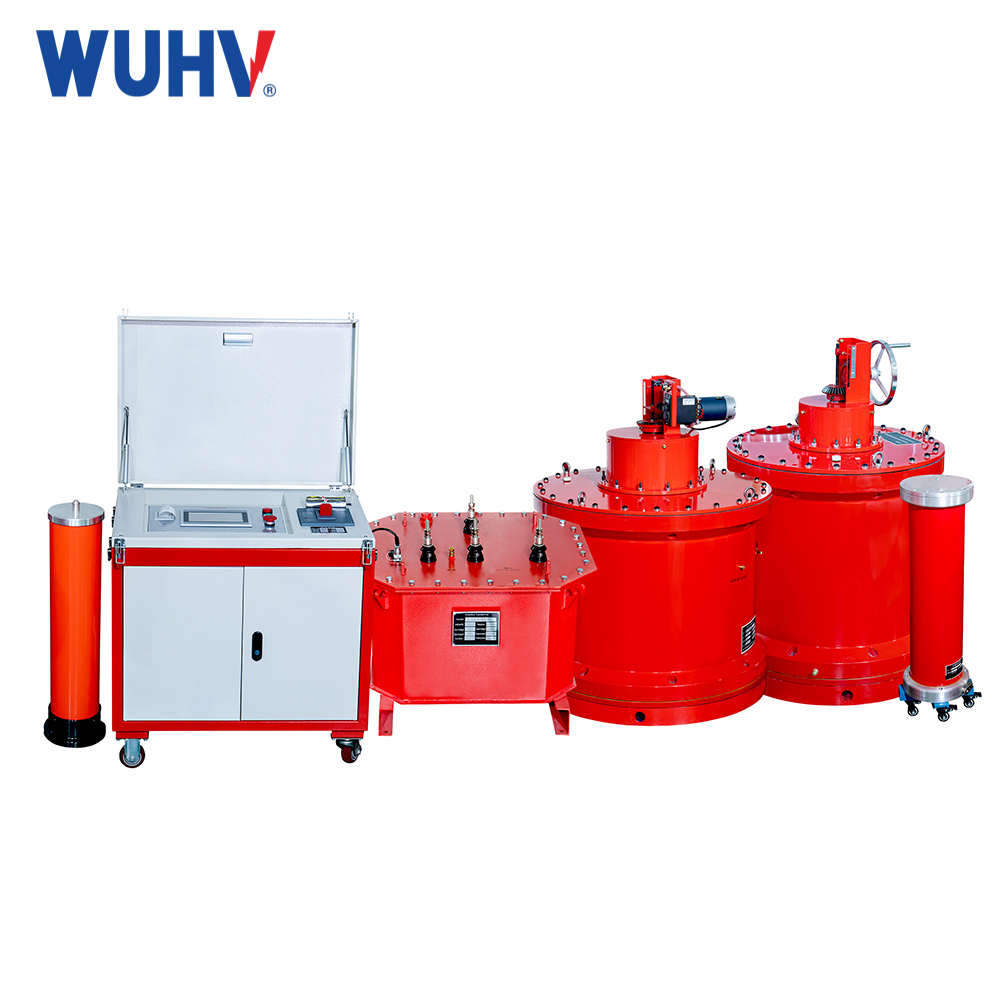
For AC withstand voltage testing of equipment such as transformers, reactors, GIS, and power cables, AC withstand voltage testing devices or variable frequency series resonance testing systems can be considered. The series resonant device can be configured according to the capacitance and test voltage of the test object, and is suitable for AC withstand voltage testing of various large capacity power equipment.
For the DC withstand voltage and insulation performance testing of cables, transformer windings, and other electrical equipment, a DC high-voltage generator can be selected. For insulation state detection of power equipment, partial discharge detection equipment, dielectric loss tester, and insulation resistance tester can be selected according to the detection requirements.
If the main detection object is a transformer, equipment such as transformer ratio tester, DC resistance tester, transformer winding deformation tester can also be configured to meet the requirements of transformer handover test and preventive test.
5、 Pay attention to the control system and protection functions of equipment
The high-altitude on-site testing environment may be complex, and the safety and stability of equipment operation are equally important.
When selecting testing equipment, attention should be paid to whether it has overvoltage protection, overcurrent protection, zero start protection, discharge protection, and emergency stop functions. For the series resonance test device, attention should also be paid to functions such as automatic tuning, automatic boosting, automatic lowering, and detuning protection.
Equipment equipped with digital control systems can help operators observe voltage, current, frequency, and other test parameters in real time, reducing errors caused by manual operations.
For equipment that needs to be used in remote mountainous areas, outdoor substations, or hydropower stations, remote control and data storage functions also have practical value and can improve on-site testing efficiency.
6、 Consider the transportation and on-site usage conditions of the equipment
High altitude power projects are usually located in mountainous areas, remote regions, or areas with relatively complex transportation conditions. Experimental equipment should not only meet electrical performance requirements, but also consider transportation and installation conditions.
For on-site inspection work that requires frequent movement, it is recommended to prioritize modular, portable, or split type design testing equipment. The weight, external dimensions, connection method, and difficulty of on-site assembly of the equipment may all affect the actual efficiency of use.
If the equipment needs to be fixedly installed in high-altitude test stations or substations for a long time, the structural strength, dust resistance, moisture resistance, and convenience of long-term operation and maintenance of the equipment should be given priority consideration.
7、 Choose equipment suppliers with experience in high-altitude applications
The selection of high-altitude testing equipment depends not only on the product itself, but also on the manufacturer's technical capabilities and project experience.
Before procurement, users should inquire with the supplier about the applicable altitude range, insulation design requirements, temperature adaptation range, and relevant type test data of the equipment. For special altitude conditions, manufacturers can also be required to conduct targeted design based on project parameters and provide corresponding technical solutions.
Wuhan UHV Power Technology Co., Ltd. has been engaged in the research and development, production, and sales of power testing equipment for a long time. Its products cover fields such as series resonance testing devices, AC withstand voltage testing equipment, DC high-voltage generators, transformer testing equipment, and partial discharge detection equipment. For users with high-altitude application needs, equipment configuration and technical requirements can be communicated with the manufacturer based on the actual project altitude, test voltage, test sample capacity, and on-site environment.
8、 Conduct on-site verification before putting the equipment into use
Even if the testing equipment meets the relevant technical requirements at the factory, it does not mean that on-site environmental verification can be ignored.
After the equipment arrives at the place of use, it should be installed and inspected according to the product technical documents to confirm that the grounding system, external insulation distance, electrical connections, and protection functions meet the requirements. Before conducting the high-voltage test officially, necessary no-load inspection and functional testing should also be carried out.
For high-voltage tests in high-altitude areas, necessary altitude corrections should be made to the test voltage based on applicable standards and actual altitude conditions. The specific correction method should be determined based on the equipment type, insulation structure, and relevant standards, and cannot simply apply the same correction factor to all testing equipment.
The detection of power equipment in high-altitude areas has put forward higher requirements for testing instruments. Air insulation strength, heat dissipation capacity, temperature adaptability, control and protection functions, and on-site usage conditions are all key considerations in the procurement process.
When choosing high-altitude testing equipment, one should start from the actual test project and usage environment, and fully understand the technical parameters and environmental adaptability of the equipment. Only when the equipment performance, testing requirements, and on-site conditions match each other can the safety and reliability of power equipment testing work in high-altitude areas be guaranteed.