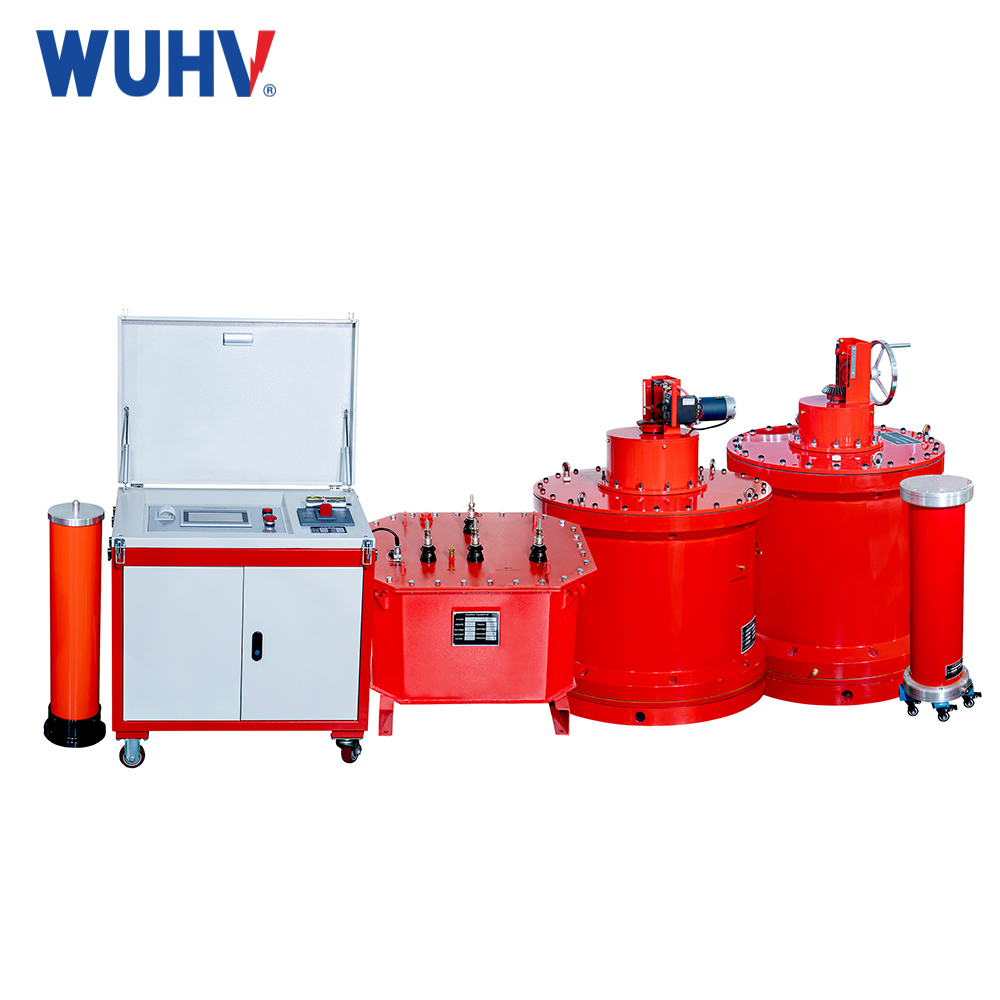
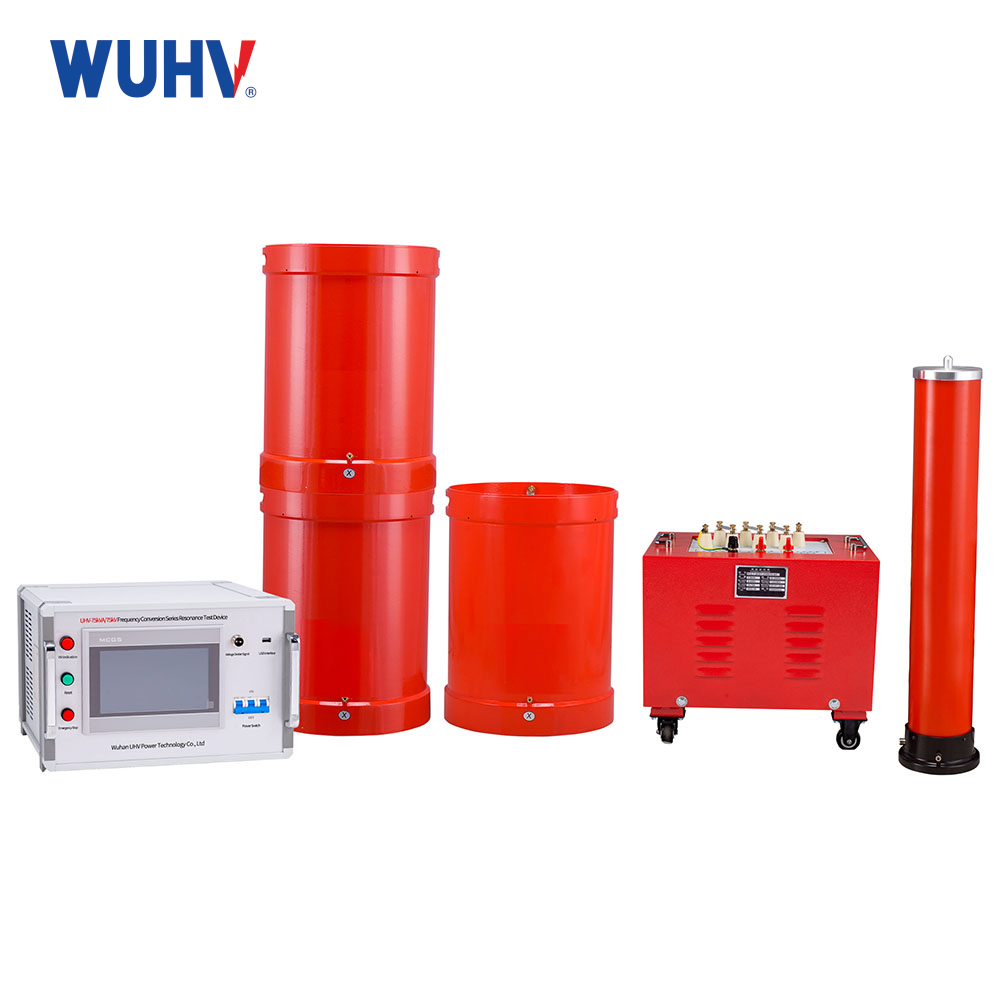
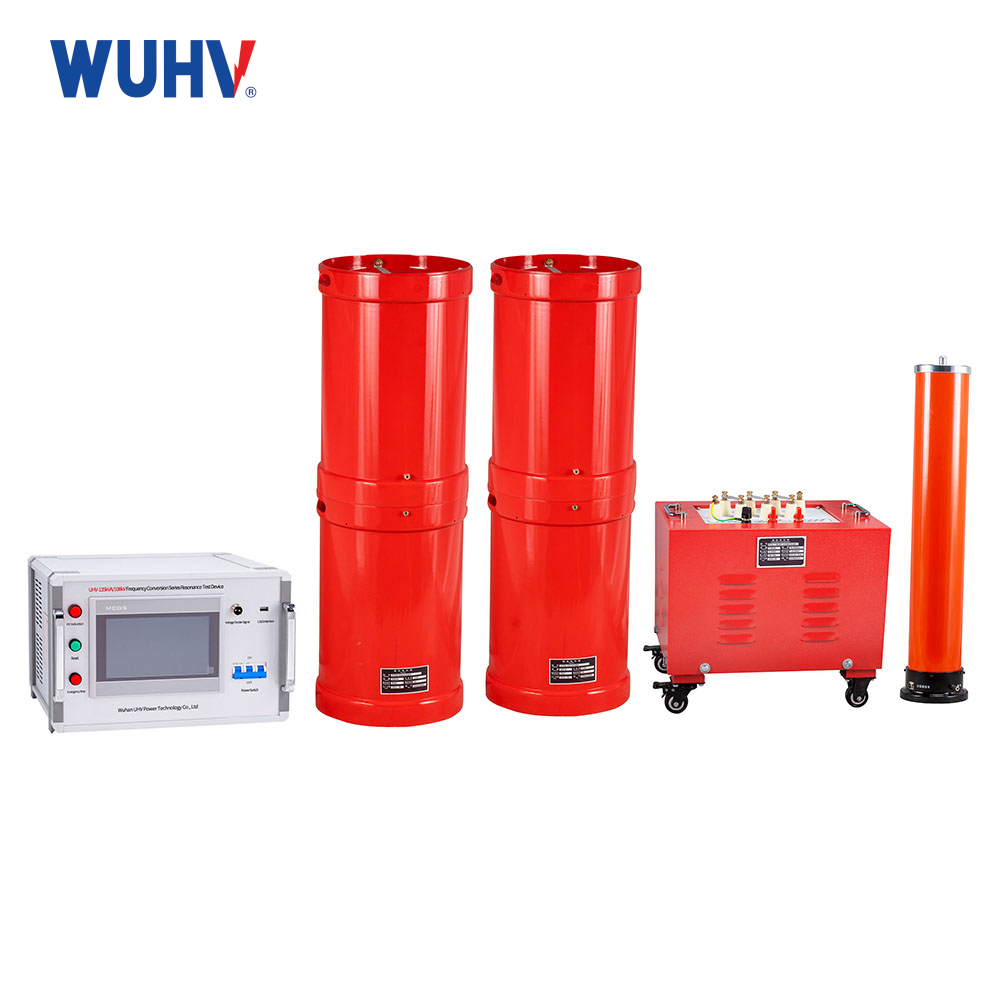
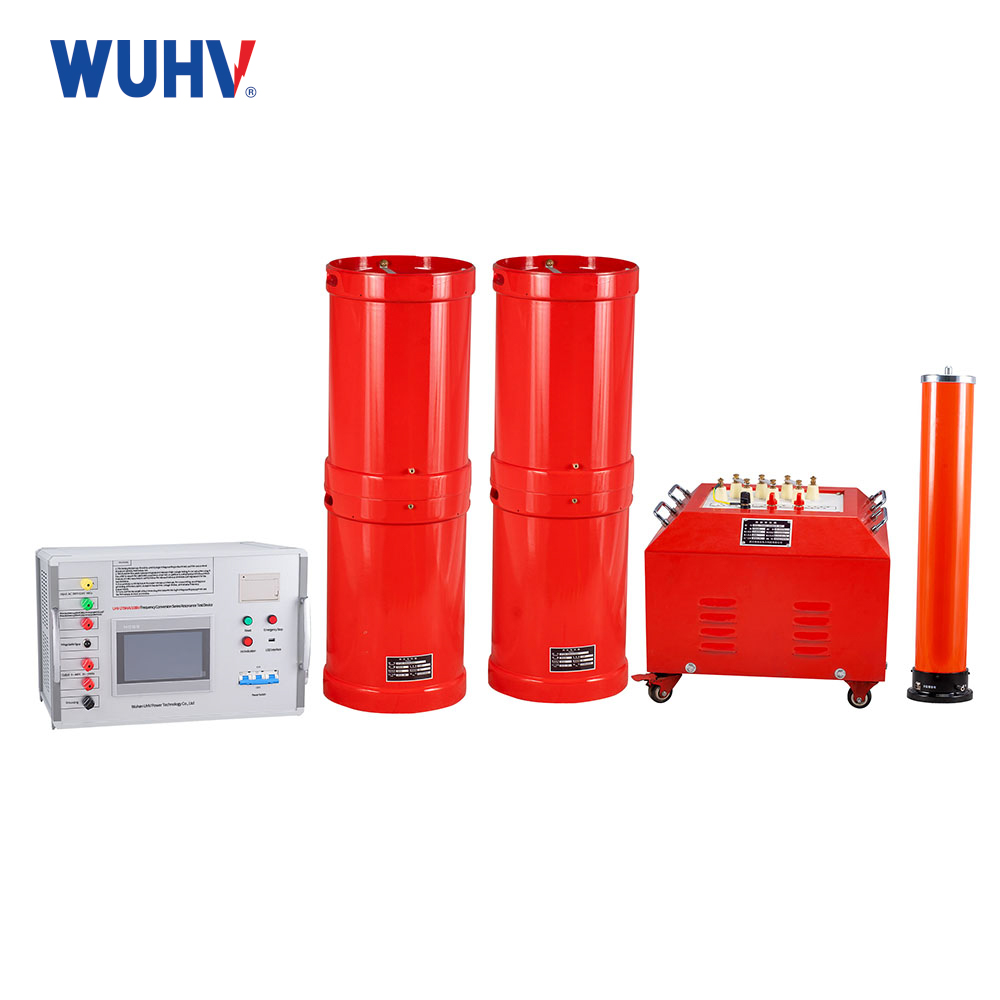
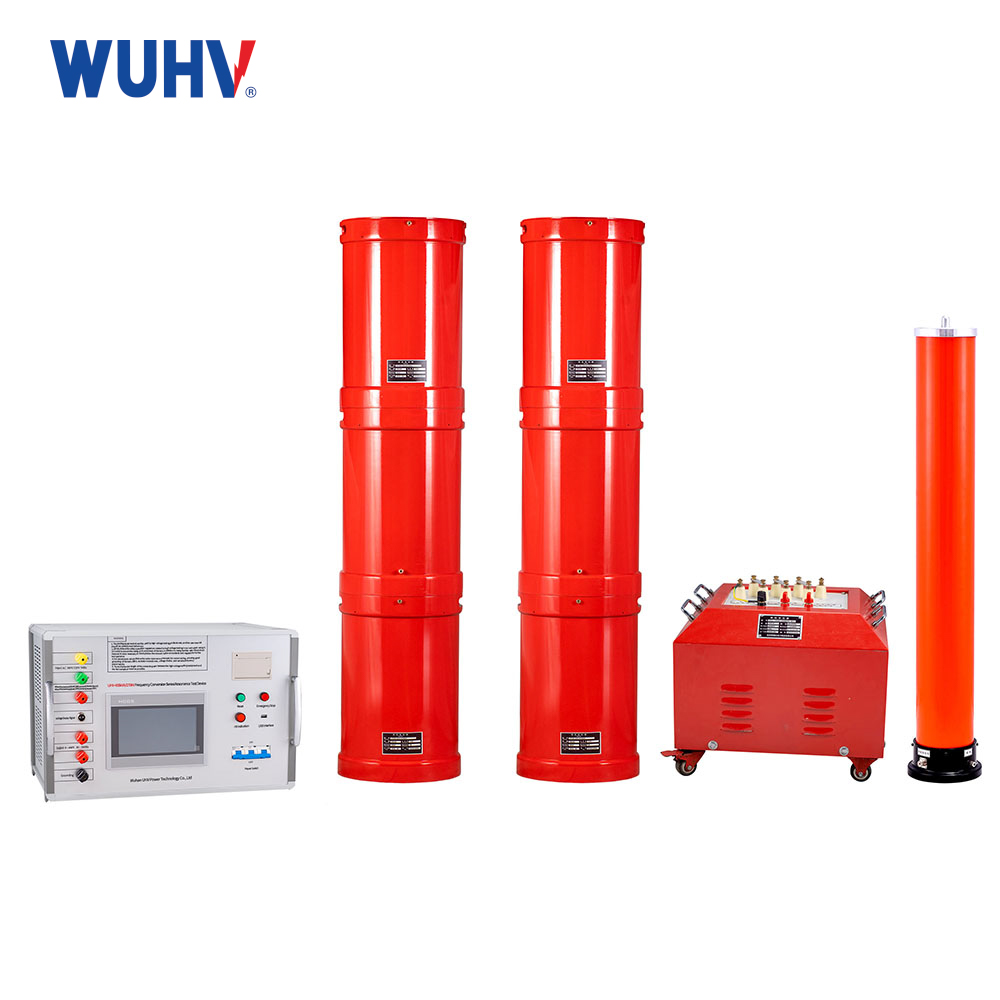
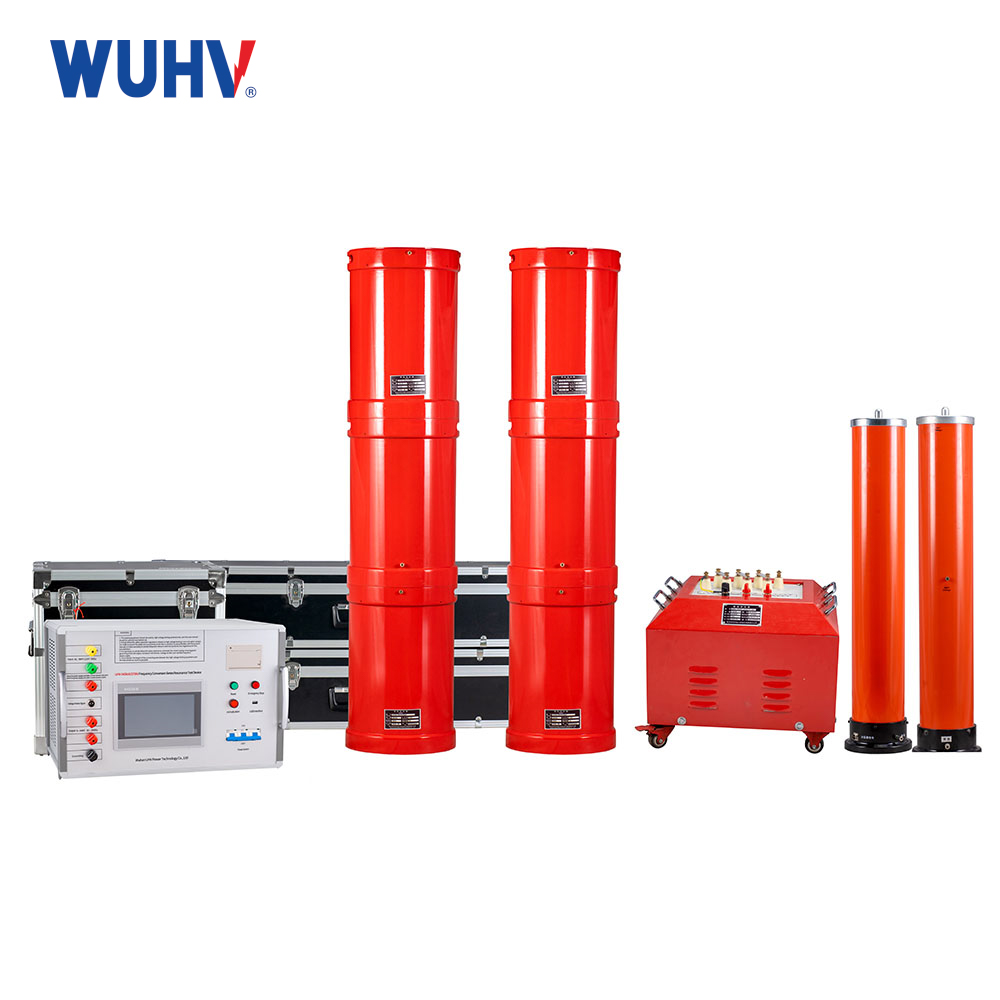
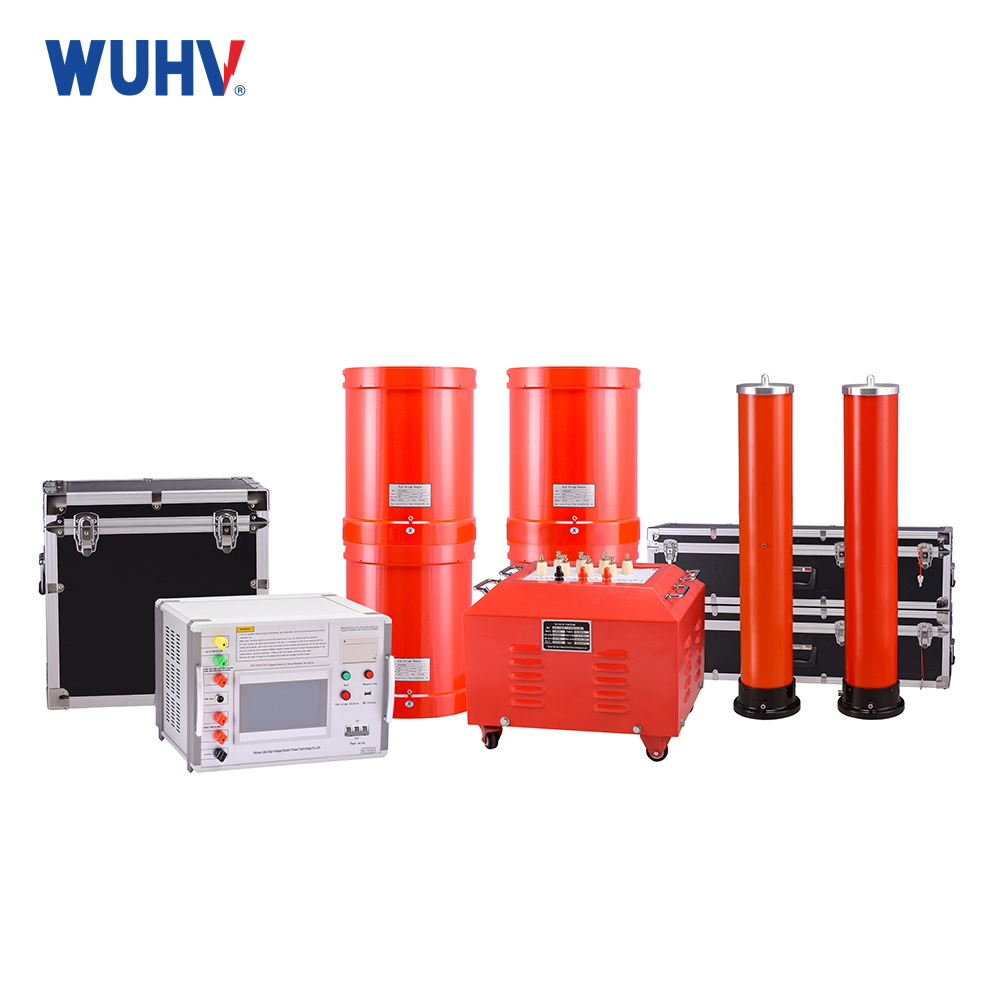
UHV(H) AC Resonant Test System for CVT
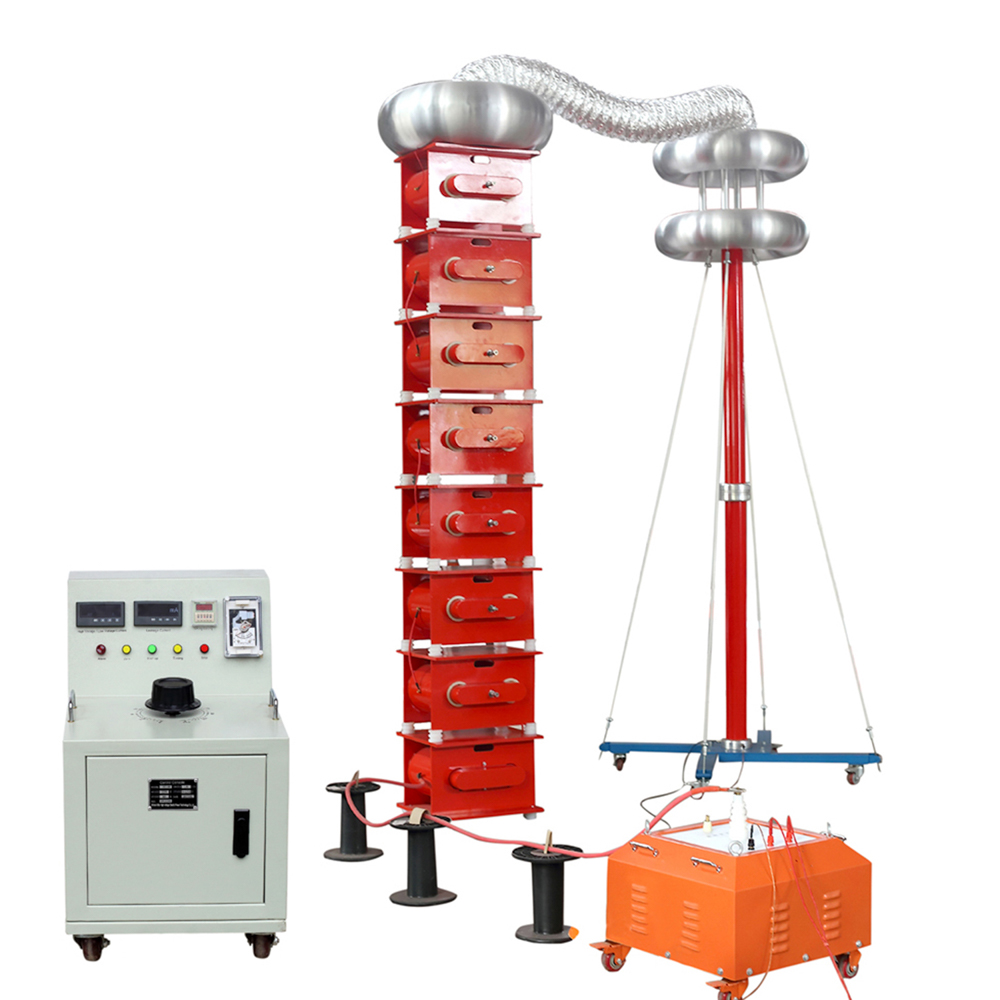
Product Introduction
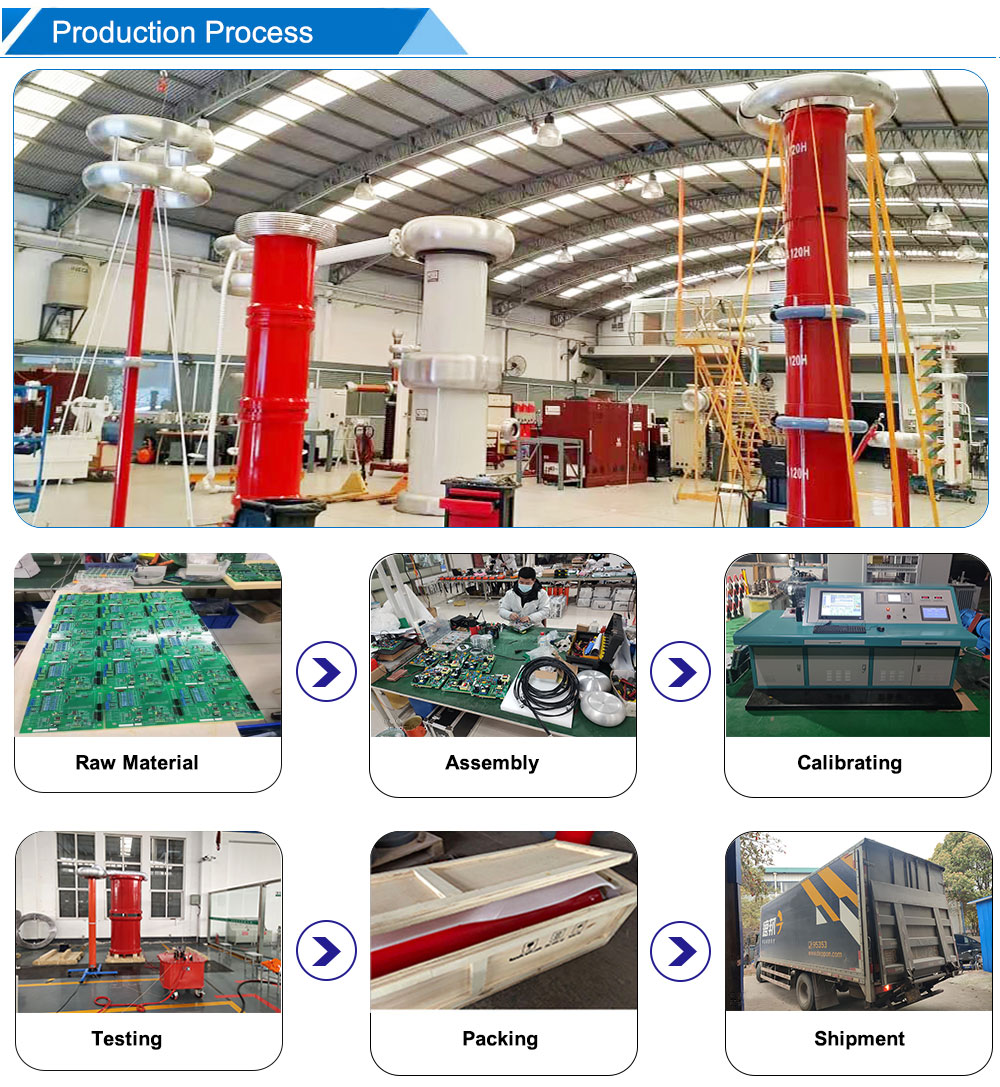
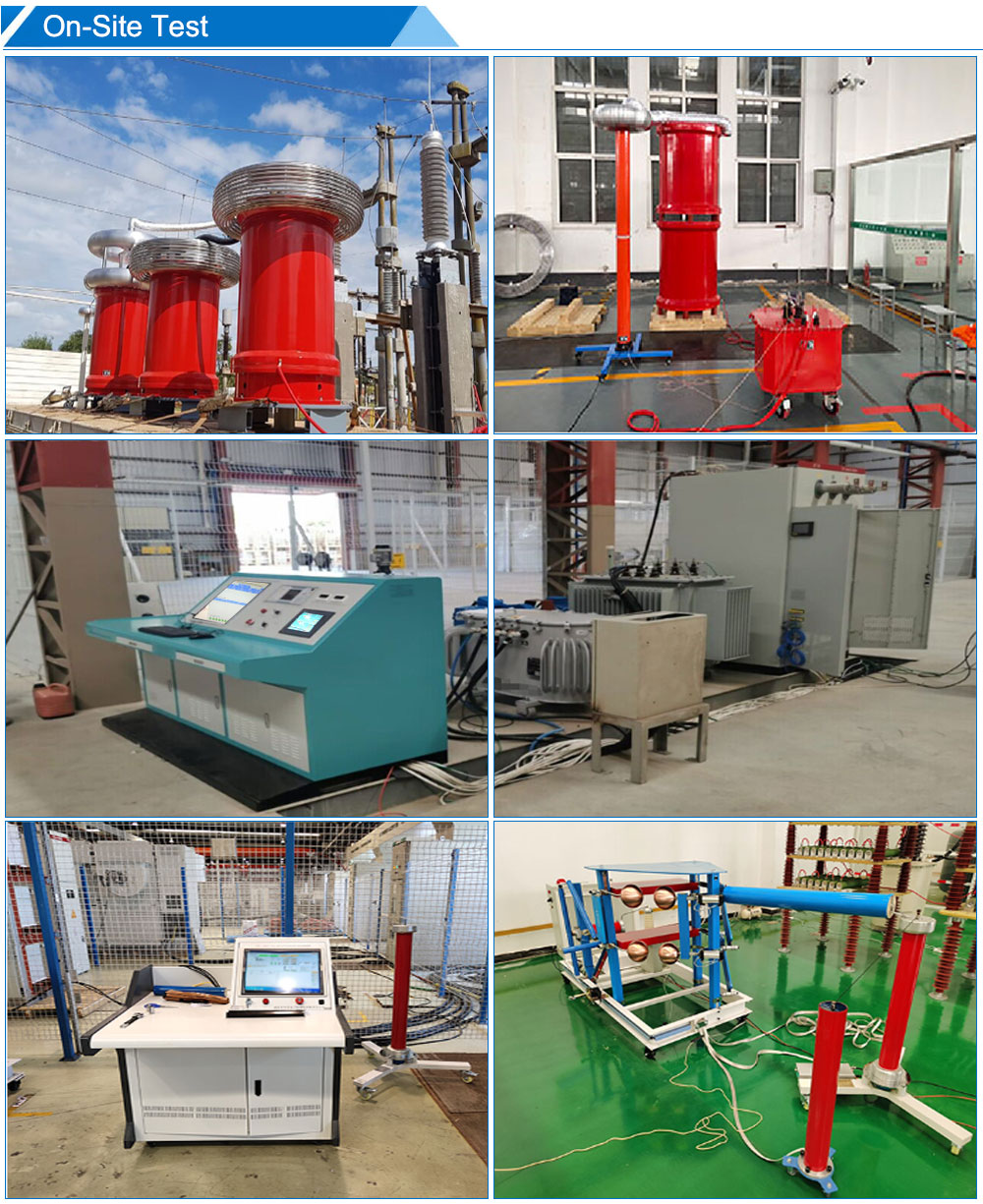
The calibration of capacitive voltage transformers (CVTs) requires testing to be conducted strictly at a 50Hz frequency. However, complex on-site geographical conditions often make it difficult for traditional testing devices to meet the requirements for handling and operation in the field. In response, the series resonant boosting device, as the first domestically developed field-adjustable resonance device in China, has been widely adopted for on-site calibration of capacitor voltage transformers at 500 kV and below.
Fundamental principle
Power frequency resonance is divided series resonance and parallel resonance, the two ways to take compensation effect of power capacity is basically thesame, after reaching full compensation, the input capacity can be reduced to 1 / Q or less of test output capacity.
พารามิเตอร์ทางเทคนิค
Rated Capacity: 80kVA
rated voltage: 160kV
Adjustable inductance range: 65~130H
Rated frequency: 50Hz
Rated current: 0.5A
Adjustable gap range:0~300mm
Its main functions include:
1. Boosting function: By designing a resonant circuit, the input voltage is boosted, converting the low voltage signal into a high voltage signal.
2. Voltage stabilization function: By adjusting the resonant circuit, stable control of the output voltage is achieved to ensure stable output within the set range.
3. Protection function: AC Series Resonace Test System is usually equipped with overvoltage, overcurrent, short circuit and other protection functions to ensure that the circuit can be cut off in a timely manner in case of abnormal situations, protecting the safety of equipment and personnel.
4. Adjustment function: By adjusting the parameters of the resonant circuit, the output voltage can be adjusted to meet the needs of different occasions.
5. Wide applicability: The power frequency series resonant boosting device is suitable for various power frequency electrical equipment, such as power systems, transformers, power electronic equipment, etc., and can provide stable high voltage output.
Application scenarios
New cable line handover test: Verify the insulation integrity after laying;
Substation expansion or renovation: perform overall voltage withstand on GIS, circuit breakers, and transformers;
During the overhaul period of the power plant: conduct preventive tests on the stator winding of the generator;
Rail transit and wind power projects: on-site testing of long-distance power collection lines.
Product advantages
1. AC series resonace test system supplier can achieve efficient voltage boosting, enabling the power system to better adapt to long-distance transmission and high-power loads.
2. Transformer calibration series resonace test equipment manufactures has a simple structure, low maintenance cost, and long service life, making it very suitable for large-scale application in the power system.
3. The power frequency series resonant boost device price also has the advantages of fast response speed and high stability, which can effectively ensure the normal operation of the power system.
Product limitations
1. Due to the characteristics of resonant circuits, the device has certain requirements for the frequency and amplitude of the input voltage, requiring precise adjustment and control.
2. The components in the resonant circuit need to have high voltage resistance to ensure the safe and stable operation of the system.
Therefore, when designing and applying power frequency series resonant boost devices, these factors need to be fully considered to ensure the performance and reliability of the device.
Common Q&A on Series Resonance
Q: What is series resonance? What are its advantages?
A: Series resonance refers to the occurrence of resonance in a circuit when the inductance and capacitance of the inductor and capacitor are numerically equal to the impedance of alternating current. Compared to traditional power frequency withstand voltage tests, it can obtain higher test voltage with a smaller capacity and has a frequency selection effect on the tested object, effectively detecting defects in insulation.
Q: Is series resonance good or bad?
A: Series resonance itself is a physical phenomenon with both advantages and disadvantages. Reasonable utilization can improve efficiency in power transmission and filter design; However, uncontrolled resonance in the power grid may cause equipment damage and affect grid safety.
Q: How to avoid harmful series resonance in the circuit?
A: It can be avoided by changing circuit parameters (inductance, capacitance, frequency) or adding damping elements.
Q: What is the difference between series resonance and parallel resonance?
A: During series resonance, the circuit impedance is minimized and the current is maximized; When parallel resonance occurs, the circuit impedance is maximum and the current is minimum. Their roles and application scenarios in circuits are also different.