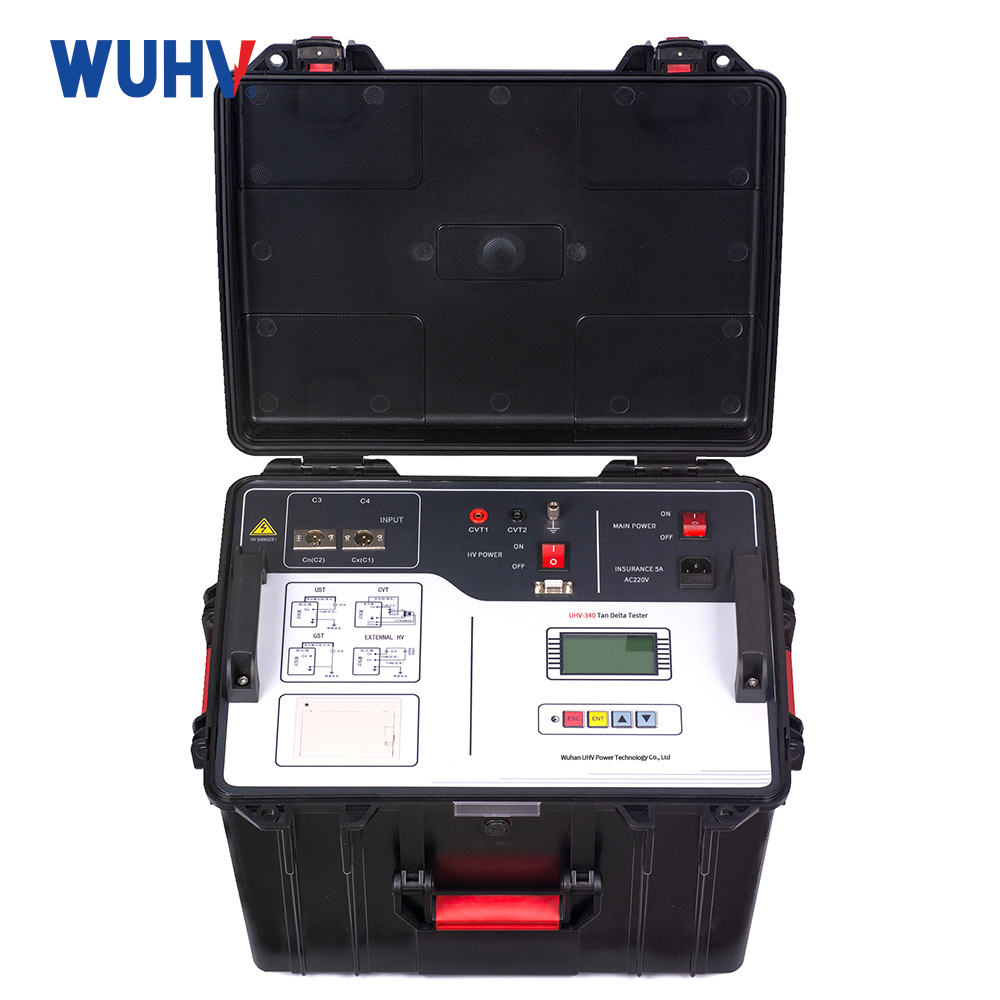
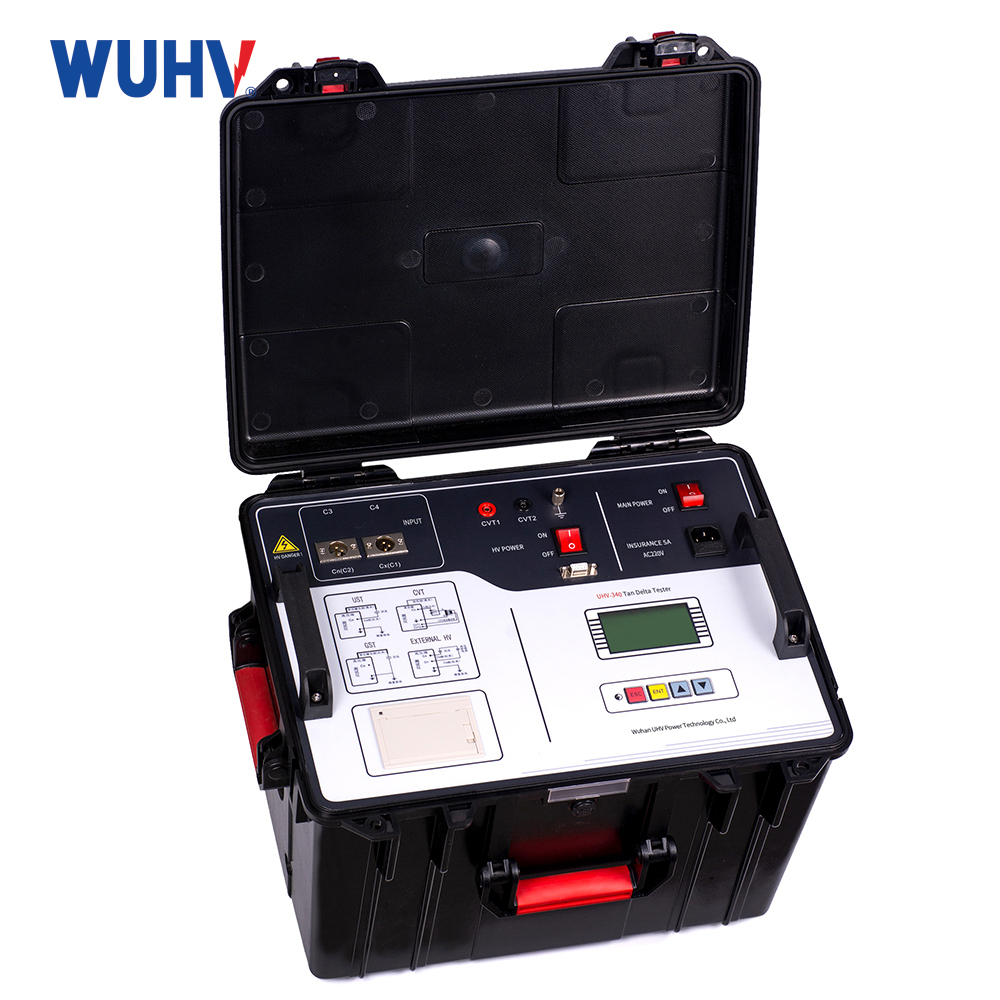
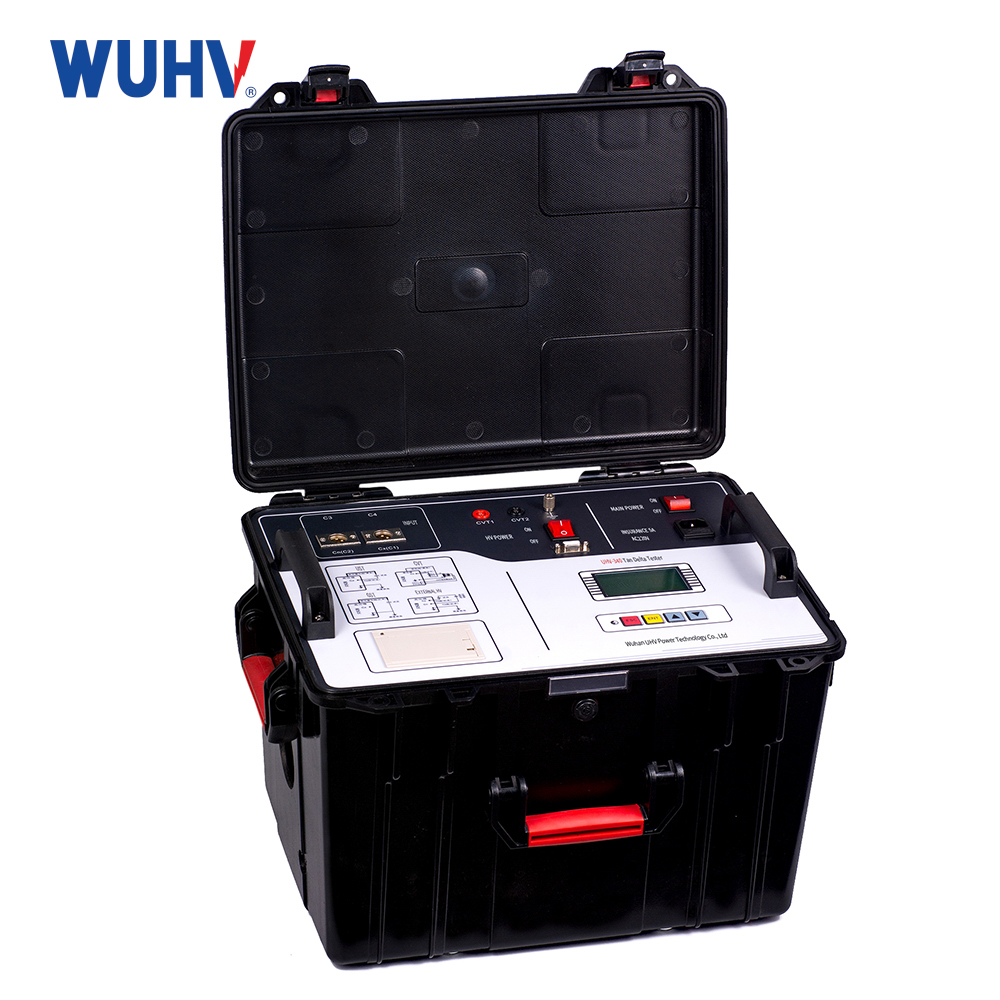


Product Introduction
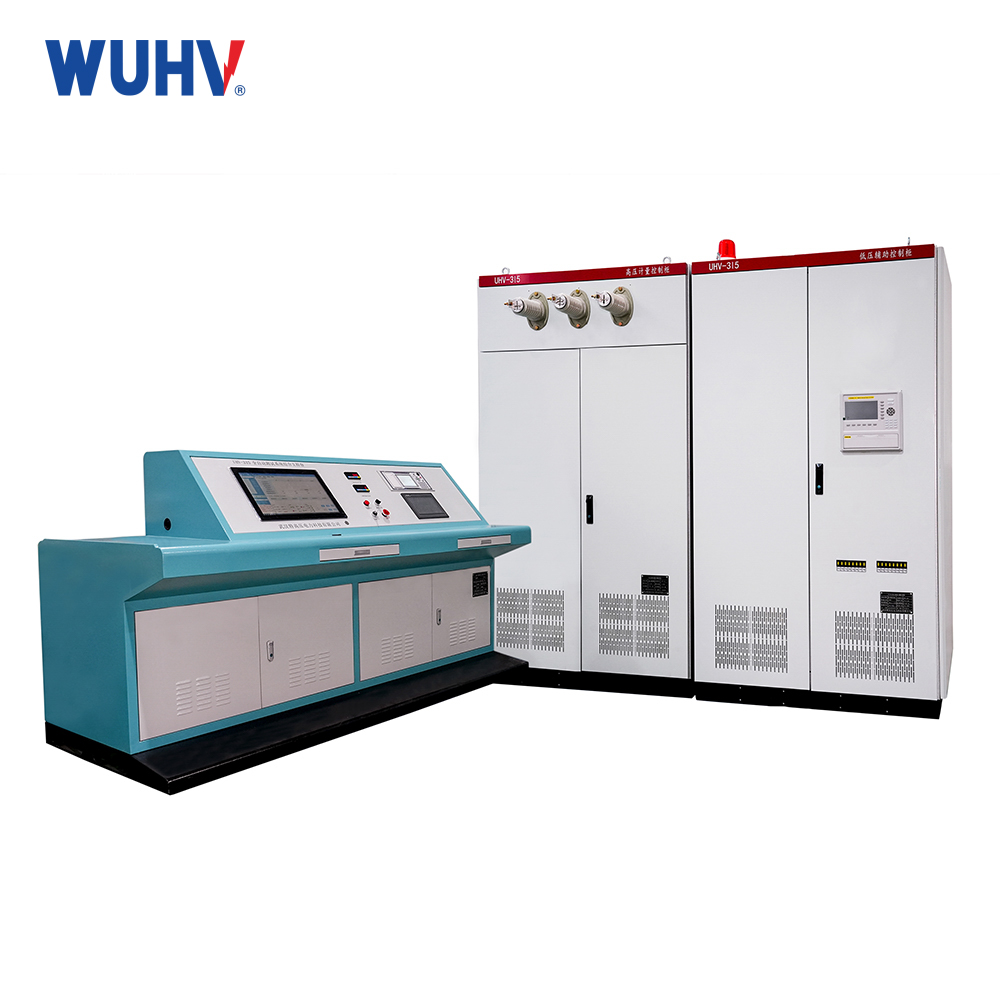
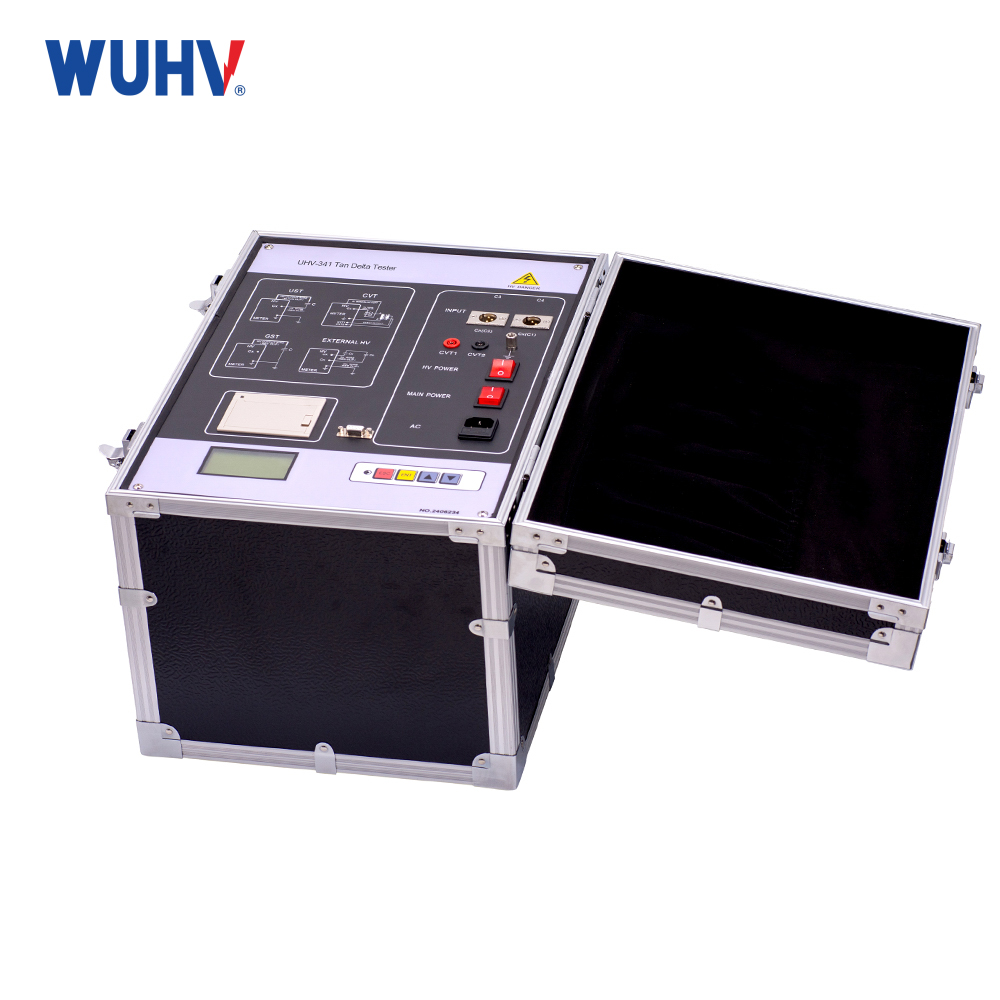
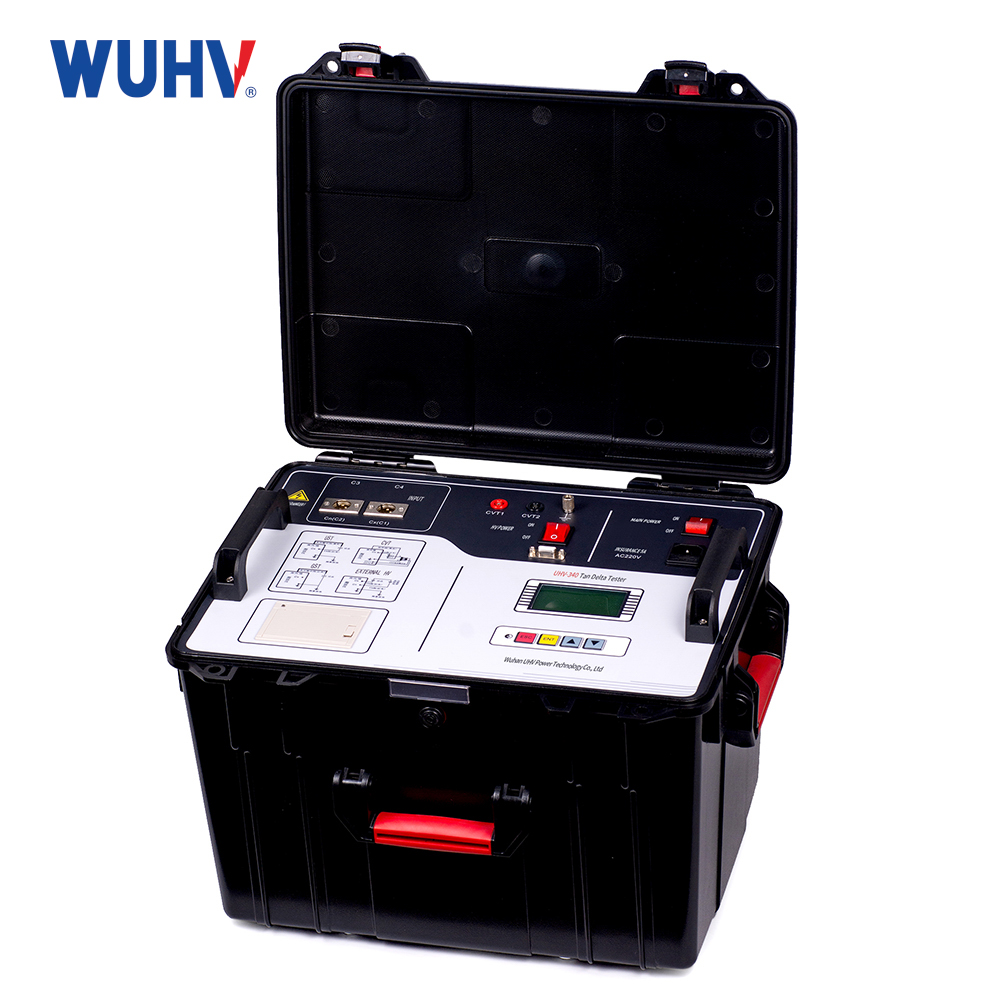
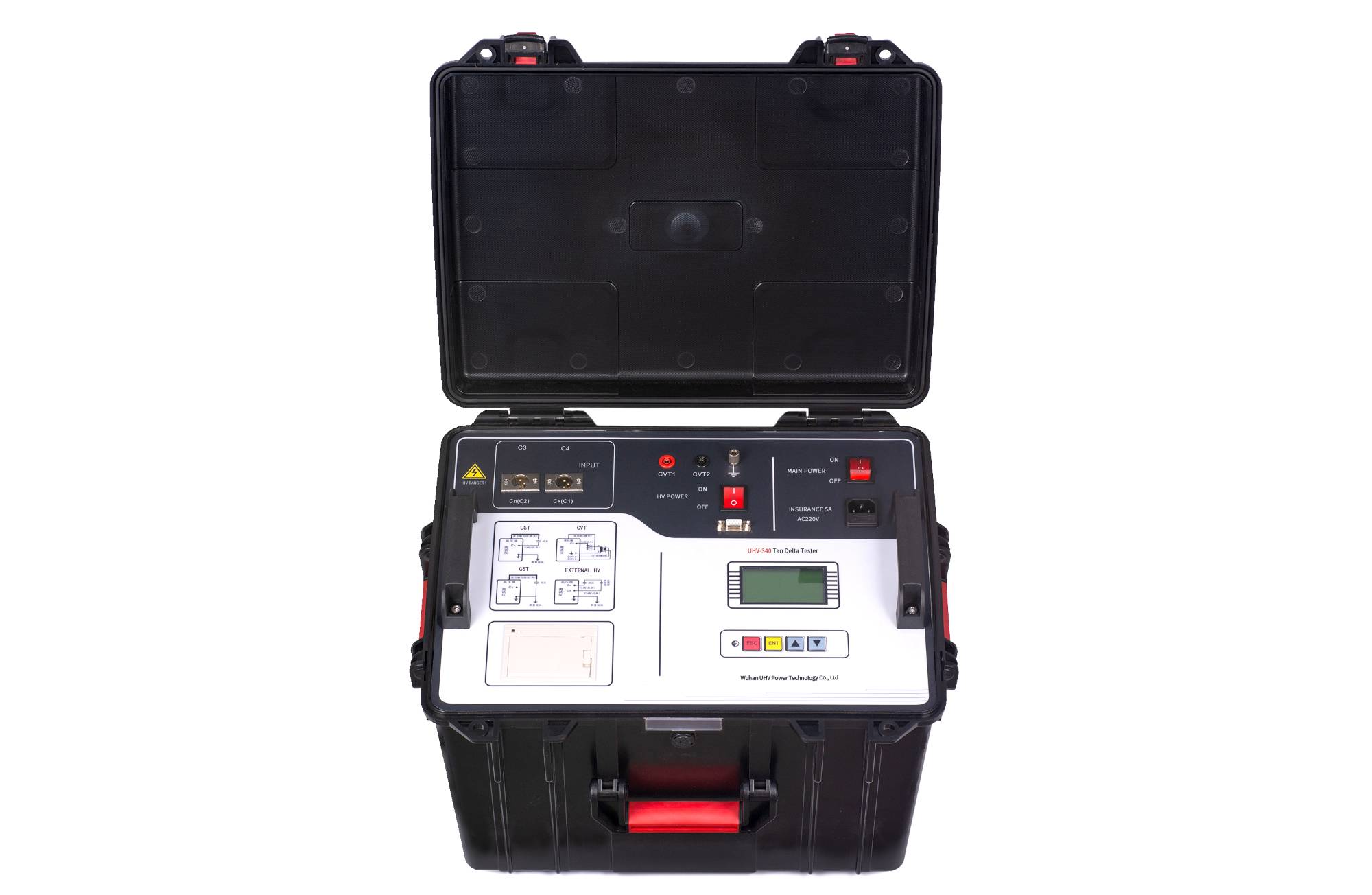
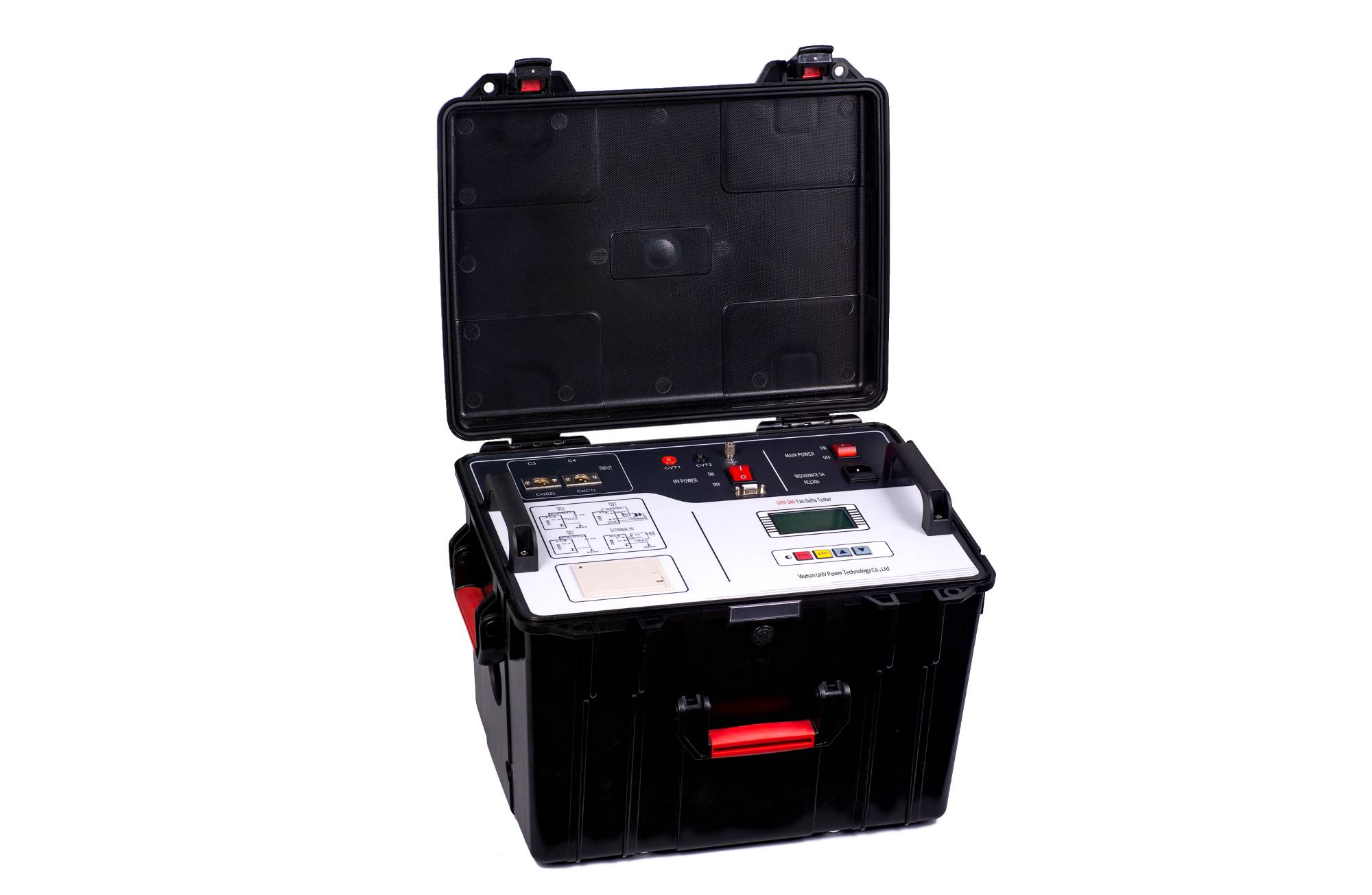
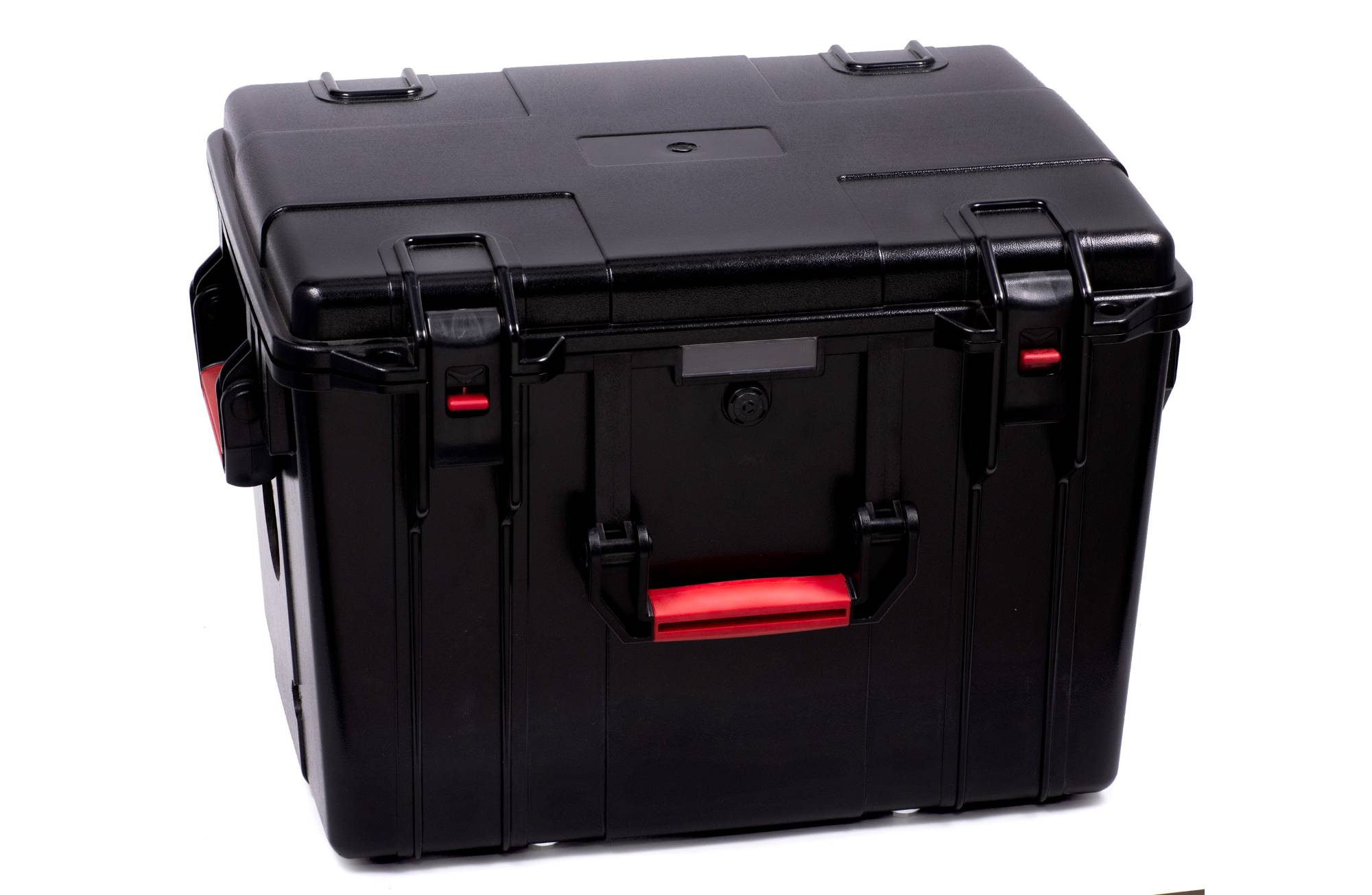
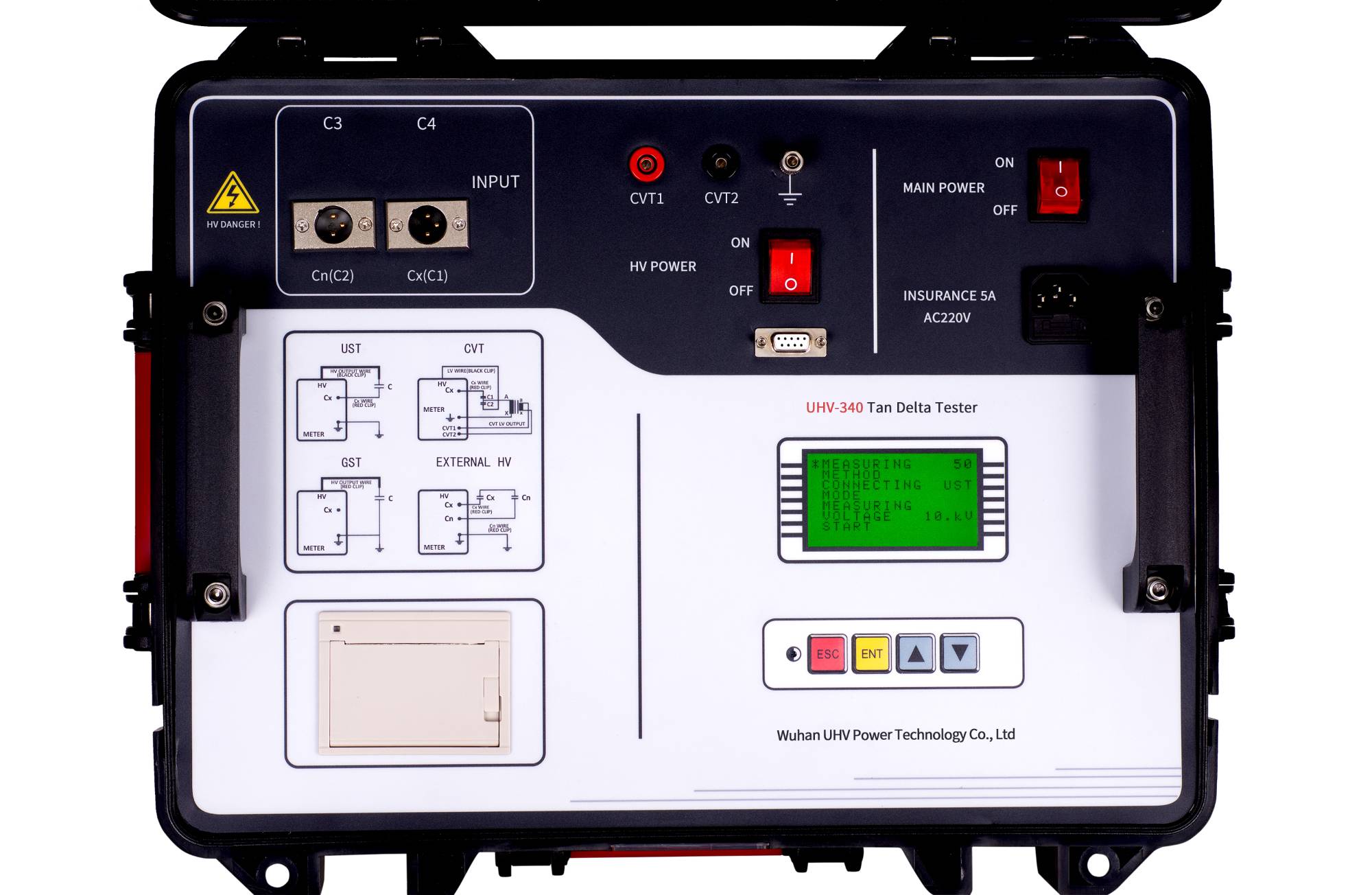
UHV-340 Transformer tan delta tester is a kind of instrument with high precision fully automatic measuring the dielectric loss tangent and capacitance of various high voltage electrical equipments in the power plants and substations. The adoption of frequency conversion technology could ensure the accurate measurement in the interference of strong electric field.
พารามิเตอร์ทางเทคนิค
| เอาท์พุทไฟฟ้าแรงสูง | 0.5~10kV Increasing by 500V for each level, a total of 20 levels, capacity: 1500VA |
| ความแม่นยำ | tgδ: ± (reading * 1.5% +0.06%) |
| Cx: ± (อ่าน * 1.5% +5 PF) | |
| ปณิธาน | tgδ: 0.001% Cx: 0.001pF |
| ช่วงการวัด | tgδ: 0.001% ~ 100% |
| Internal high pressure : 3PF~60000PF/10KV 60PF~1µF/0.5KV | |
| External high pressure: 3PF~1.5µF/10KV 60PF~30µF/0.5KV | |
| CVT Variable ratio test | Variation ratio measurement accuracy: ± reading *1% |
| The range of the measurement: 10~99999 | |
| Phase measurement accuracy: ±0.1° | |
| Phase measurement range: 0~359.9° | |
| แหล่งจ่ายไฟ | AC 220V ± 10% 50/60 ± 1Hz |
| วิธีการวัด | a.single frequency: 45(45Hz measuring)、50(50Hz measuring)、55(55Hz measuring)、60(60Hz measuring)、65(65Hz measuring) |
| b.different frequency: 50D(45Hz/55Hz measure each time) 60D(55Hz/65Hz measure each time) Automatic frequency conversion | |
| การปรับฮาร์มอนิก | ≤3% |
| เงื่อนไขการสมัคร | -15 ℃-50 ℃ |
| ความชื้นสัมพัทธ์ | <80% |
| มิติ | 460 (L) × 345 (W) × 345 (H) |
| น้ำหนัก | 35kg |
 |  |  |
Product Features:
1. การป้องกันการแทรกแซงการแปลงความถี่: การใช้เทคโนโลยีป้องกันการรบกวนการแปลงความถี่ยังสามารถวัดได้อย่างถูกต้องในการรบกวน 200% ข้อมูลการทดสอบมีเสถียรภาพเหมาะสำหรับการทดสอบการสูญเสียอิเล็กทริกป้องกันการรบกวนในสถานที่
2. การวัดความแม่นยำสูง: การลอยตัวของความถี่การวิเคราะห์รูปคลื่นแบบดิจิทัลและเทคโนโลยีการสอบเทียบด้วยตนเองของสะพานด้วยตัวเก็บประจุมาตรฐานสามปลายที่มีความแม่นยำสูงเพื่อให้ได้การวัดการสูญเสียอิเล็กทริกที่มีความแม่นยำสูงและความแม่นยำในการวัดการเชื่อมต่อเชิงบวก / ย้อนกลับและความเสถียรสอดคล้องกัน
3. ความต้านทานอินพุตช่วงทั้งหมดของเครื่องมือต่ำกว่า 2Ω ซึ่งช่วยลดอิทธิพลของความจุเพิ่มเติมของสายทดสอบ
4. สามารถเชื่อมต่อกับถ้วยน้ำมันภายนอกเพื่อทำการทดสอบการสูญเสียอิเล็กทริกของฉนวนที่มีความแม่นยำสามารถเชื่อมต่อกับอิเล็กโทรดการวัดวัสดุที่เป็นของแข็งเพื่อทำการทดสอบการสูญเสียอิเล็กทริกของฉนวนที่มีความแม่นยำ
5. ความเข้ากันได้ดี: ระบุแหล่งจ่ายไฟระบบ 50Hz / 60Hz โดยอัตโนมัติรองรับแหล่งจ่ายไฟของเครื่องกำเนิดไฟฟ้าแม้ว่าความผันผวนของความถี่จะมีขนาดใหญ่ แต่ก็สามารถวัดได้ตามปกติ
6. แบบจำลองการวัดการสูญเสียอิเล็กทริกแบบอนุกรมและแบบขนานสองแบบสามารถเข้ากันได้กับแพลตฟอร์มการสอบเทียบและมาตรฐานการสูญเสียอิเล็กทริกการตรวจสอบเครื่องมือที่สะดวก
7. การรักษาความปลอดภัยหลายระดับเพื่อความปลอดภัยส่วนบุคคลและอุปกรณ์
8. การป้องกันแรงดันไฟฟ้าสูง: ทดสอบการลัดวงจรการพังหรือความผันผวนของกระแสไฟฟ้าแรงสูงสามารถตัดเอาต์พุตได้โดยการลัดวงจร
9. การป้องกันแรงดันไฟฟ้าต่ำ: การเชื่อมต่อที่ไม่ถูกต้อง 380V ความผันผวนของแหล่งจ่ายไฟหรือไฟฟ้าขัดข้องกะทันหัน เริ่มต้นการป้องกัน จะไม่ทำให้เกิดแรงดันไฟฟ้าเกิน
10.Grounding protection: the tan delta tester grounding is bad so that the shell with dangerous voltage, start grounding protection.
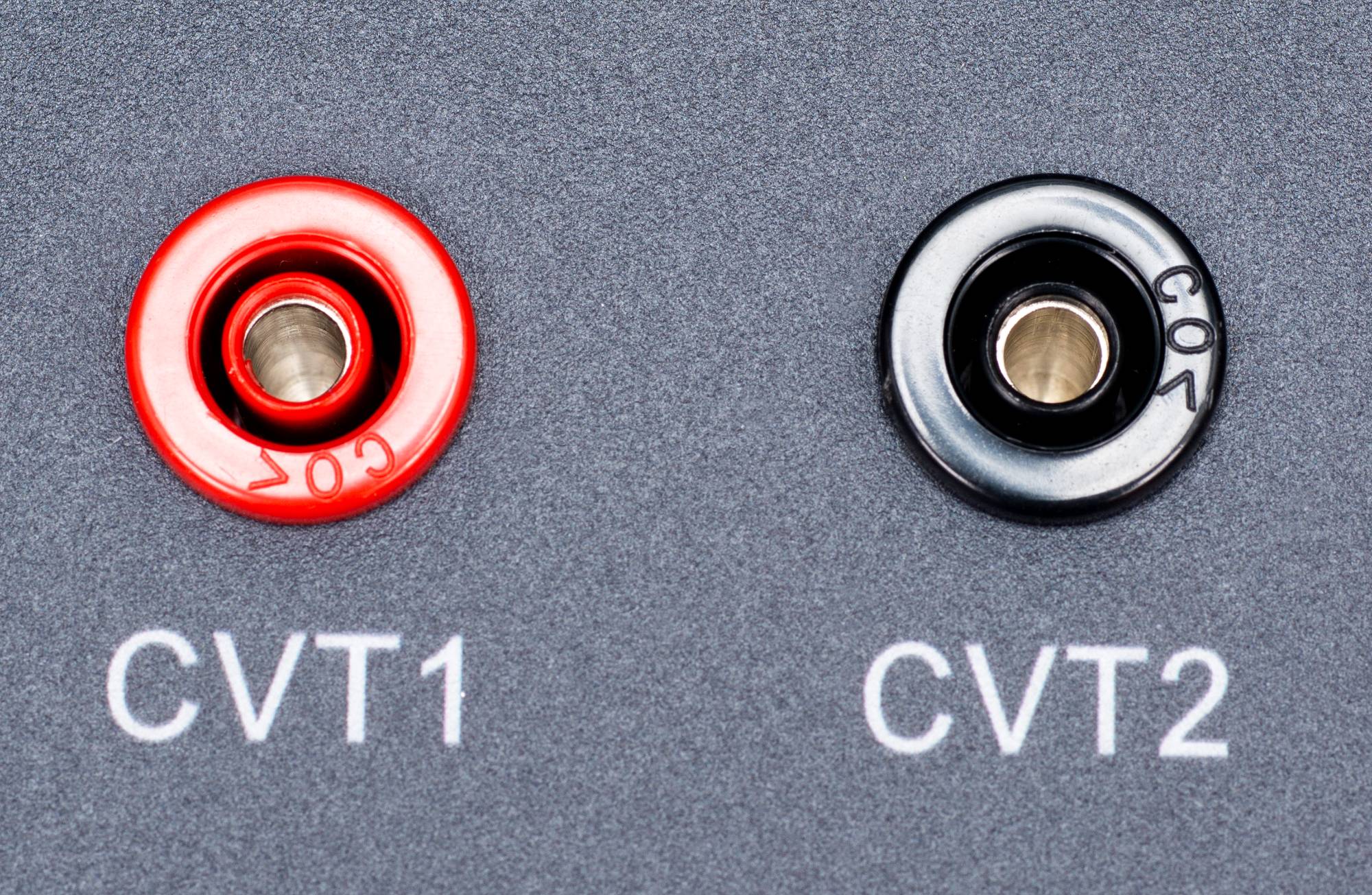
11.CVT: แรงดันไฟฟ้าและกระแสไฟฟ้าแรงสูงและกระแสไฟฟ้าแรงต่ำและกระแสไฟสี่ระดับจะไม่ทำให้อุปกรณ์เสียหาย การเลือกเมนูไม่ถูกต้องจะไม่ส่งแรงดันไฟฟ้ากระตุ้น ไม่มีเอาต์พุตแรงดันไฟฟ้าสูง 10kV ในระหว่างการวัด CVT
12. ต่อต้าน "ความจุที่เพิ่มขึ้น": เมื่อทำการวัดผลิตภัณฑ์ทดสอบความจุขนาดใหญ่จะปรากฎเอฟเฟกต์ "ความจุที่เพิ่มขึ้น" ของแรงดันไฟฟ้าเพิ่มขึ้น เครื่องมือสามารถติดตามแรงดันไฟฟ้าขาออกได้โดยอัตโนมัติ รักษาแรงดันไฟฟ้าทดสอบให้คงที่
13. ประสิทธิภาพแผ่นดินไหว: เครื่องมือใช้การออกแบบแผ่นดินไหวที่ไม่ซ้ำกันสามารถทนต่อการสั่นสะเทือนในการขนส่งทางไกลที่แข็งแกร่งความปั่นป่วนโดยไม่มีความเสียหาย
14.สายไฟฟ้าแรงสูง : สายหุ้มฉนวนไฟฟ้าแรงสูงใช้ถูพื้นได้
15. ความก้าวหน้าทางเทคนิคฟังก์ชั่นอันทรงพลังพร้อมอินเทอร์เฟซตัวเก็บประจุมาตรฐานภายนอกการติดตามอัตโนมัติของความถี่ทดสอบภายนอก 40Hz ~ 70Hz รองรับแหล่งจ่ายไฟความถี่และแหล่งจ่ายไฟเรโซแนนซ์ซีรีย์เพื่อทำการทดสอบการสูญเสียอิเล็กทริกไฟฟ้าแรงสูงความจุสูง
16. ด้วยฟังก์ชั่นแจ้งการปล่อยวงจรติดต่อที่ไม่ดีเพื่ออำนวยความสะดวกในการระบุสายไฟมีความน่าเชื่อถือ
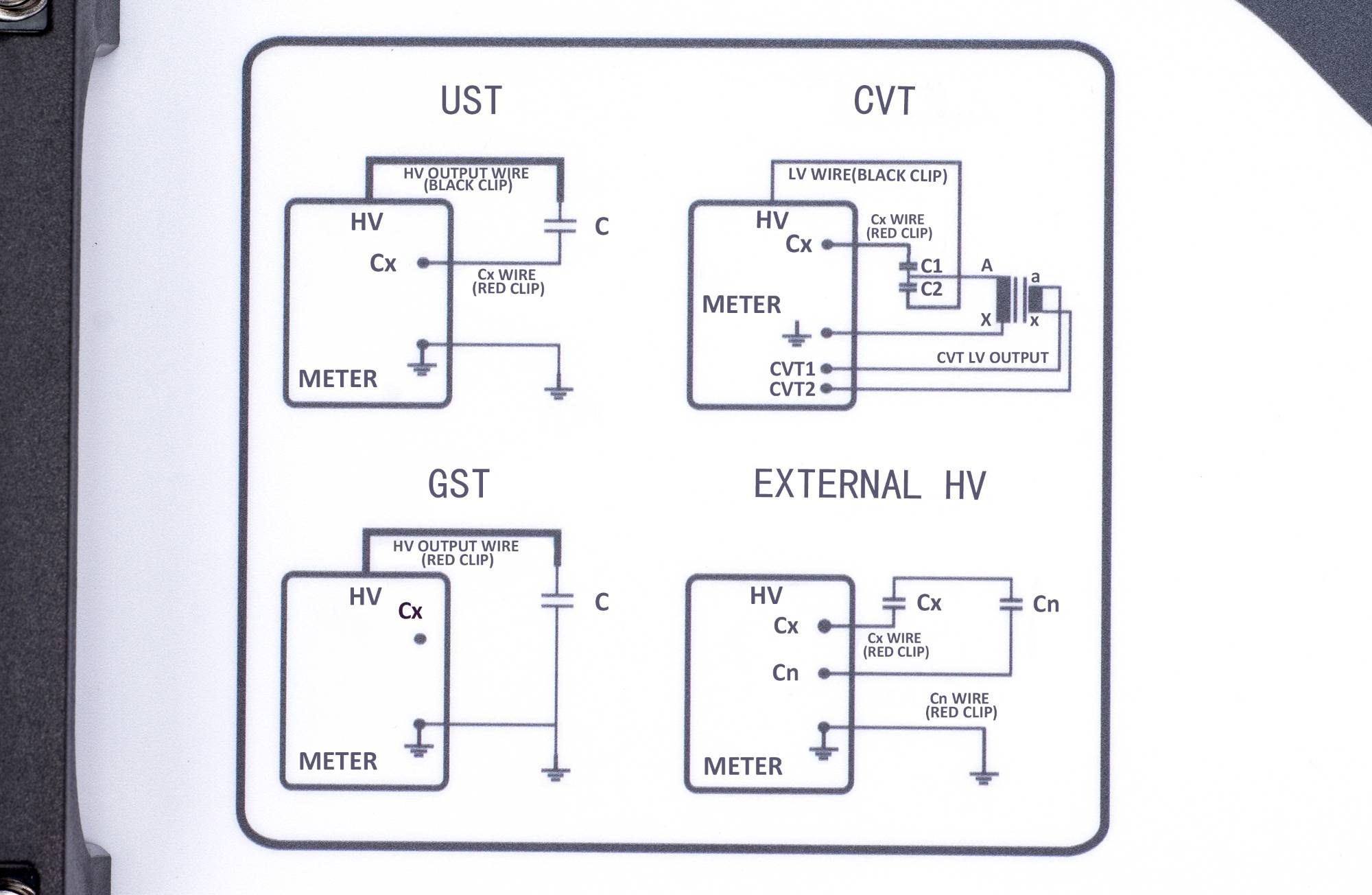
17. ด้วยฟังก์ชั่นการวัดวิธีการกระตุ้นตนเอง CVT ทำให้ C1/C2 สามารถวัดได้ในเวลาเดียวกัน การต่อสายดินบัสบาร์ชดเชยอัตโนมัติและอิทธิพลแรงดันไฟฟ้าบางส่วนของตัวเก็บประจุมาตรฐาน ไม่จำเป็นต้องเปลี่ยนสายและอุปกรณ์เสริมภายนอกใด ๆ และสายเชื่อมต่อไฟฟ้าแรงสูงสามารถ ถูพื้น.
18. ด้วยฟังก์ชันการป้องกันแรงดันไฟฟ้าต่ำของสายไฟย้อนกลับ ในกรณีการต่อสายดินบัสบาร์ 220kVCVT C11 สามารถทำได้โดยไม่ต้องลอกการวัดการสูญเสียอิเล็กทริกของสายไฟย้อนกลับ 10kV และสามารถเชื่อมต่อในเวลาเดียวกันกับการวัดความจุหลักและทาสสอง
19.English text menu, large screen backlight LCD display.
20.การกำหนดค่าเครื่องพิมพ์เทอร์มอล ข้อมูลการพิมพ์ที่ชัดเจน รวดเร็ว ไม่มีเสียงรบกวน
21.ด้วยนาฬิกาปฏิทินสามารถจัดเก็บข้อมูลการวัดได้ 100 กลุ่ม
 |  |  |
Factors affecting dielectric loss
The characteristics of the material itself: the chemical composition, molecular structure, moisture content, impurities, etc. of the insulation material will directly affect its dielectric loss.
Temperature: An increase in temperature usually leads to an increase in the polarity movement of molecules, resulting in an increase in dielectric loss.
Electric field strength: Within a certain range, the higher the electric field strength, the higher the dielectric loss may also increase.
Humidity: Moisture is the "enemy" of insulation materials, which significantly increases their dielectric loss.
Frequency: The frequency of alternating current also has an impact on dielectric loss, which is the origin of the name "heterodyne" tester. tan delta tester factory can conduct tests at different frequencies to more comprehensively evaluate insulation performance.
Application Fields
1. Power industry
Power plants and substations: In power plants and substations, dielectric loss tester is mainly used to test the high-precision measurement of dielectric loss tangent and capacitance of various high-voltage power equipment. Its integrated structure and built-in components such as dielectric loss testing bridge, variable frequency voltage regulating power supply, step-up transformer, and SF6 high stability standard capacitor make the testing process more accurate and efficient.
2. Research institutions
Research on High Voltage Electrical Equipment: The dielectric loss tester supplier is suitable for measuring the TG δ and capacitance of high-voltage electrical equipment in workshops, laboratories, and research institutions. Its multiple testing modes (such as internal high voltage, external high voltage, internal standard, external standard, positive connection method, reverse connection method, etc.) can meet different testing needs.
3. In the field of electronic manufacturing
Electronic device design and production: In the design and production process of electronic devices, a dielectric loss tester can measure the dielectric loss at different frequencies to obtain the loss characteristics of the dielectric at different frequencies. This has a significant impact on the working state and performance of the circuit.
4. Insulation material testing
Insulation oil test: Equipped with an insulation oil cup, the dielectric loss tester manufactures can test the dielectric loss of insulation oil. It is more sensitive to detecting distributed defects such as overall moisture and aging of insulation or air gap discharge defects in insulation.
Frequently Asked Questions (FAQ)
Q: What types of power equipment is the variable-frequency dielectric loss tester mainly used for?
A: It is widely used for testing various high‑voltage power equipment such as transformers, instrument transformers, cables, switchgear, and insulators.
Q: Is a lower dielectric loss tangent (tan δ) value always better?
A: Yes, a lower tan δ value generally indicates lower dielectric loss of the insulating material, better insulation performance, and a lower risk of failure.
Q: What effect does temperature have on dielectric loss test results?
A: Generally, an increase in temperature enhances molecular polar motion, which leads to higher dielectric loss. Therefore, the actual temperature should be recorded and taken into account during testing.
Q: Besides the variable‑frequency dielectric loss tester, what other methods can be used to evaluate insulation performance?
A: Other methods include DC withstand voltage tests, partial discharge detection, dissolved gas analysis in oil, and various other approaches to comprehensively assess insulation performance.
Q: What advantages does Wuhan UHV Power Technology Co., Ltd. have in the field of power testing?
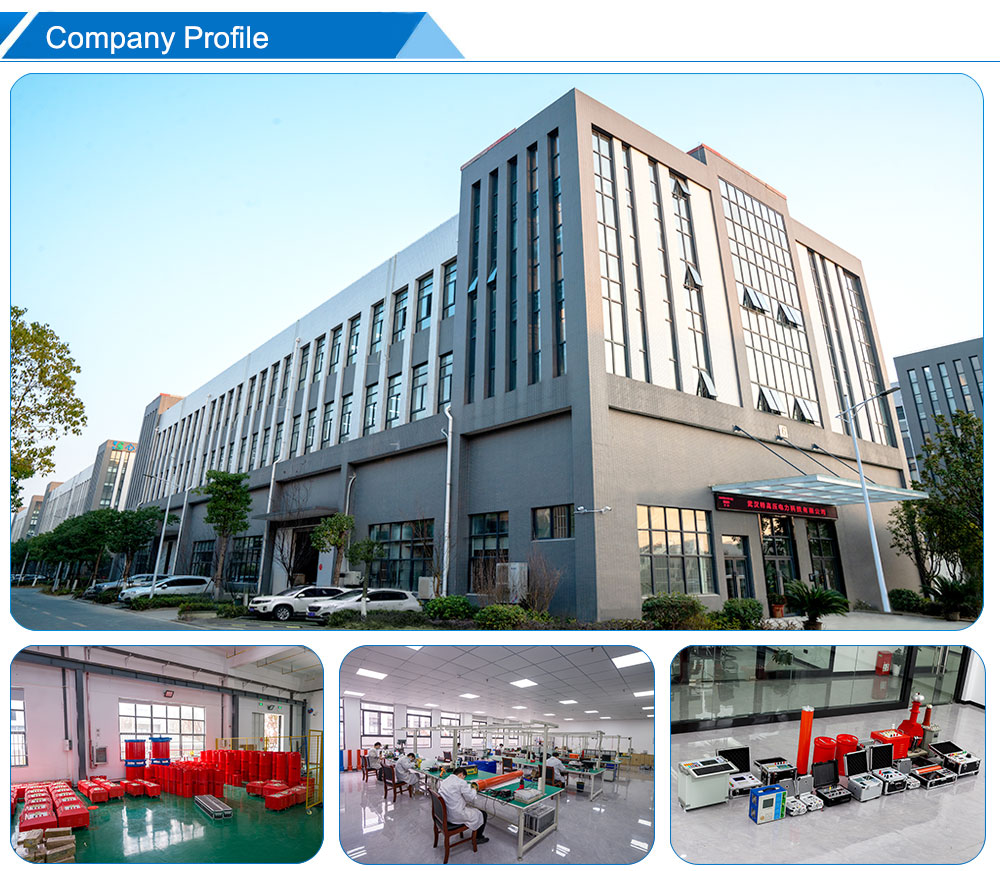
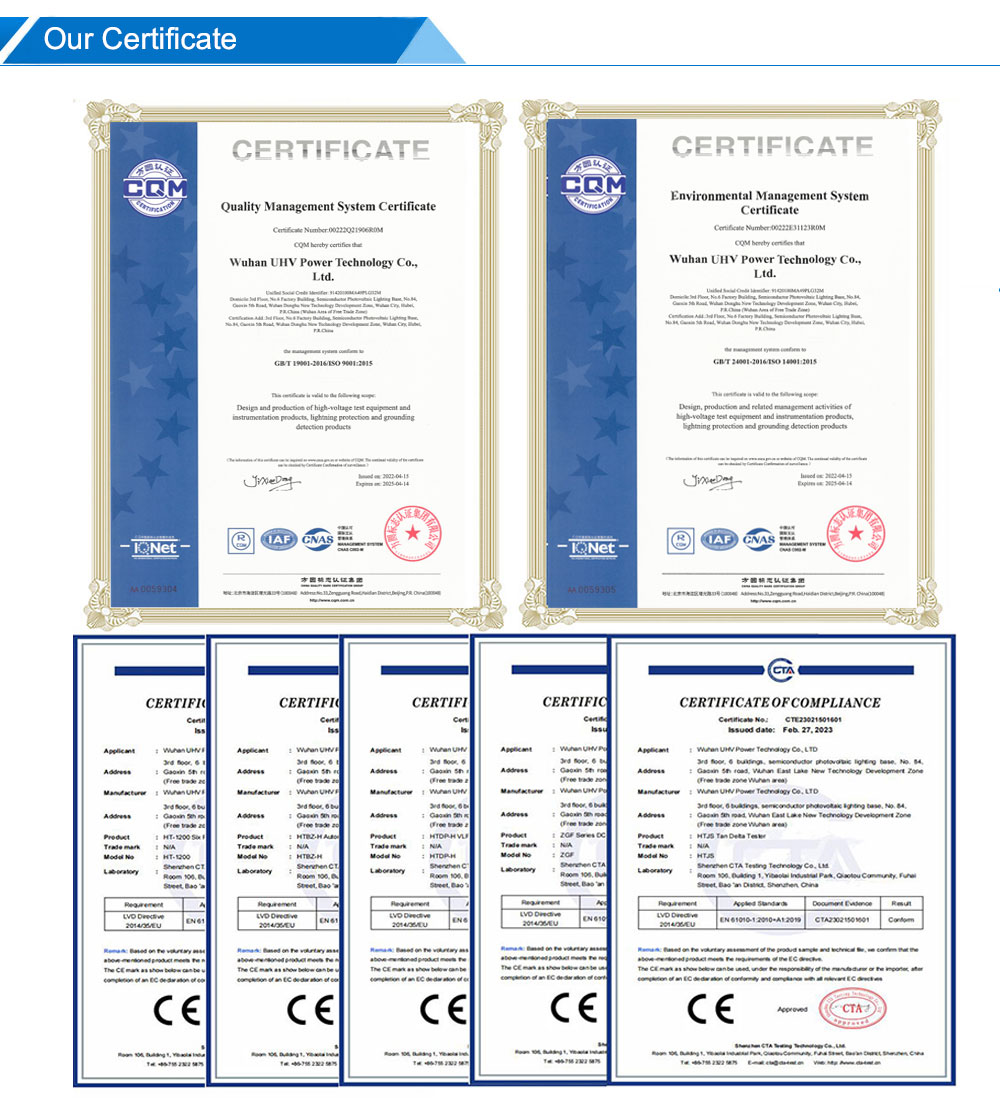
A: Wuhan UHV Power Technology Co., Ltd. has many years of industry experience, strong R&D capabilities, high product accuracy, stable performance, and provides professional pre‑sales and after‑sales services, making it a trustworthy partner.